


Creative sock darning with Sarah from @ein_koffer_voll_wolle
In an interview with Sarah from the Instagram account @ein_koffer_voll_wolle, Sarah talks about her creative journey and darning techniques.


In 2015, I cleared out the apartment of someone close to me and found a suitcase full of wool there. The wool was too beautiful to throw away, so I googled what I could do with it and came across the Berlin initiative HelfenWOLLEN. HelfenWOLLEN collects knitted and crocheted items and distributes them to people experiencing homelessness. Since I had learned to crochet as a child, I started crocheting hats and scarves (and later knitting them too) and donating them. From there, showing my work on Instagram was only a small step, and the name “Ein Koffer Voll Wolle” was simply the logical conclusion from the origin of the wool I used at the beginning.

On my account you can see knitted, crocheted, and darned pieces. I knit many donated items from donated wool for people experiencing homelessness, but of course also things for myself, my family, and friends. Alongside the usual knitting thoughts, I also write about serious topics such as homelessness, sustainability, and fast fashion.

I am in my early 40s and live in Berlin. I studied English and Japanese and have been a freelance translator for a good 10 years. I mainly translate films and series, but also texts for outdoor clothing brands. As a child I learned to crochet, but then stopped again. Only after I found the suitcase of wool did I pick up the crochet hook again, and a short time later I taught myself to knit with the help of YouTube. When I am not knitting, darning, or crocheting, I really enjoy photography and reading.

In 2010, I discovered minimalism through American blogs and began rethinking my priorities and decluttering my apartment. From general consumption, the topic then expanded to plastic in my everyday life. Since learning how harmful plastic is to our health and the planet, I avoid buying clothing with polyester whenever possible. Eventually I stopped shopping from fast-fashion brands altogether. Of course, that also required rethinking how much clothing I buy at all, because sustainable fashion is usually more expensive unless it is second-hand. And if I cannot and do not want to buy that much, then I need to take good care of the clothing I already own. That is how I eventually came to repairing and darning.
As a freelancer, the money aspect is also important to me: every T-shirt I do not have to buy new, every euro I do not spend, is a euro I do not have to earn. The lower my expenses are, the less I have to work and the more I can set other priorities - which brings everything full circle back to the minimalism that started it all.
As a freelancer, the money aspect is also important to me: every T-shirt I do not have to buy new, every euro I do not spend, is a euro I do not have to earn. The lower my expenses are, the less I have to work and the more I can set other priorities - which brings everything full circle back to the minimalism that started it all.

There are countless ways to darn, and although it is a simple activity in itself, everyone has to find the approach that suits them. Sometimes it takes me a few days and several rounds of looking at a sock before I know how I want to darn it - and sometimes it goes very quickly. It always depends on whether I want the repair to be visible or more invisible. Then I check whether there are perhaps still thin threads that only need reinforcing, or whether there is already a real hole that needs closing. And then I simply get started. A needle and some yarn - that is basically all you need.

When darning, I focus less on the area I am repairing and more on the material that needs to be mended. For knitted clothing or wool socks, I prefer duplicate stitch because it is nicely elastic and blends into the stitch structure. For holes in store-bought sports socks, I often use a weaving technique because it is quick and uncomplicated. And for a hole in a T-shirt, I like to use embroidery techniques or work with patches. In general, it is best to darn and repair with material that is as similar as possible - for example wool with wool, jersey with jersey, silk with silk.
I always say: just try it. A garment with a hole is usually lying unworn at home anyway. What is the worst that can happen? That after the attempted repair, it is still lying around at home. Then you have basically lost nothing. Maybe you should not start with your favorite sweater right away, but holes in socks are great practice pieces. If something goes wrong there, it is usually not too dramatic, because hardly anyone sees it anyway. I would also recommend not worrying too much about the perfect needle or the right darning mushroom. In my first six months I had a single old sewing needle, a few old darning threads from my grandma, and one of my niece’s toys as a “darning mushroom.” You can already do a lot with that. The first repair may not be perfect. It may not last very long either. But with every darned hole, you learn and get better.

I really like visible mending! When I want to repair as invisibly as possible, the main problem is usually finding yarn in the right color. If there is no leftover piece of the original wool, searching for the yarn can take longer than the repair itself. With visible mending, this problem disappears - I simply choose a yarn that I like together with the sock. I can also darn motifs such as a heart. Visible mending allows for so much creativity. Socially, what I like about visible mending is that it helps dissolve the stigma that darning is something you have to hide. In the past, darning was often a sign that someone could not afford new clothing. Today, the visible repair almost becomes a symbol with which I want to show: I darn because my clothing and the resources are worth it to me, because my environment matters to me. I think that is wonderful.
Thank you so much, dear Sarah, for your valuable and inspiring food for thought. We have already grabbed a needle and darning yarn and are starting to practice right away.
For everyone still looking for the right yarn: our online shop has plenty of qualities and colors waiting for you, with which many holes can surely be beautifully embellished.
More articles
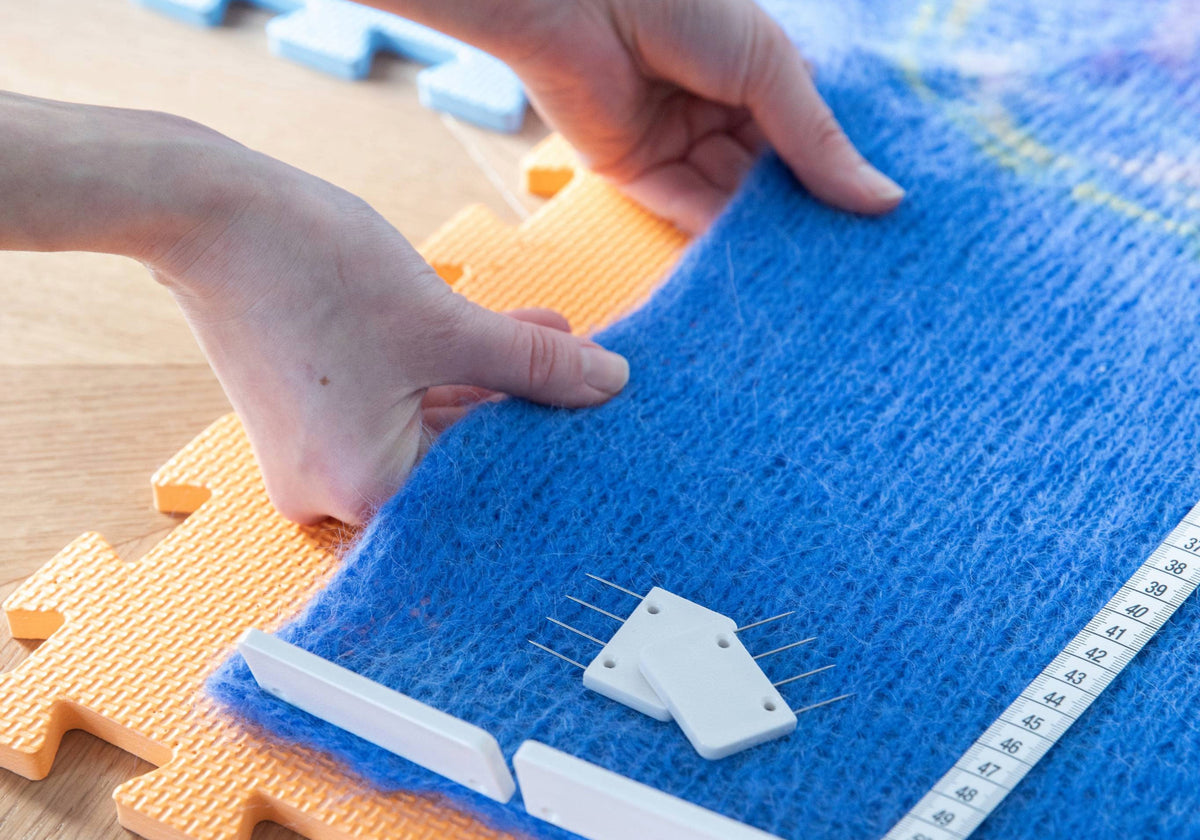
Blocking knitted pieces – why blocking is the secret finishing touch
Blocking knitted pieces – why blocking is the secret finishing touch
If you've invested a lot of love and time in your knitting project...
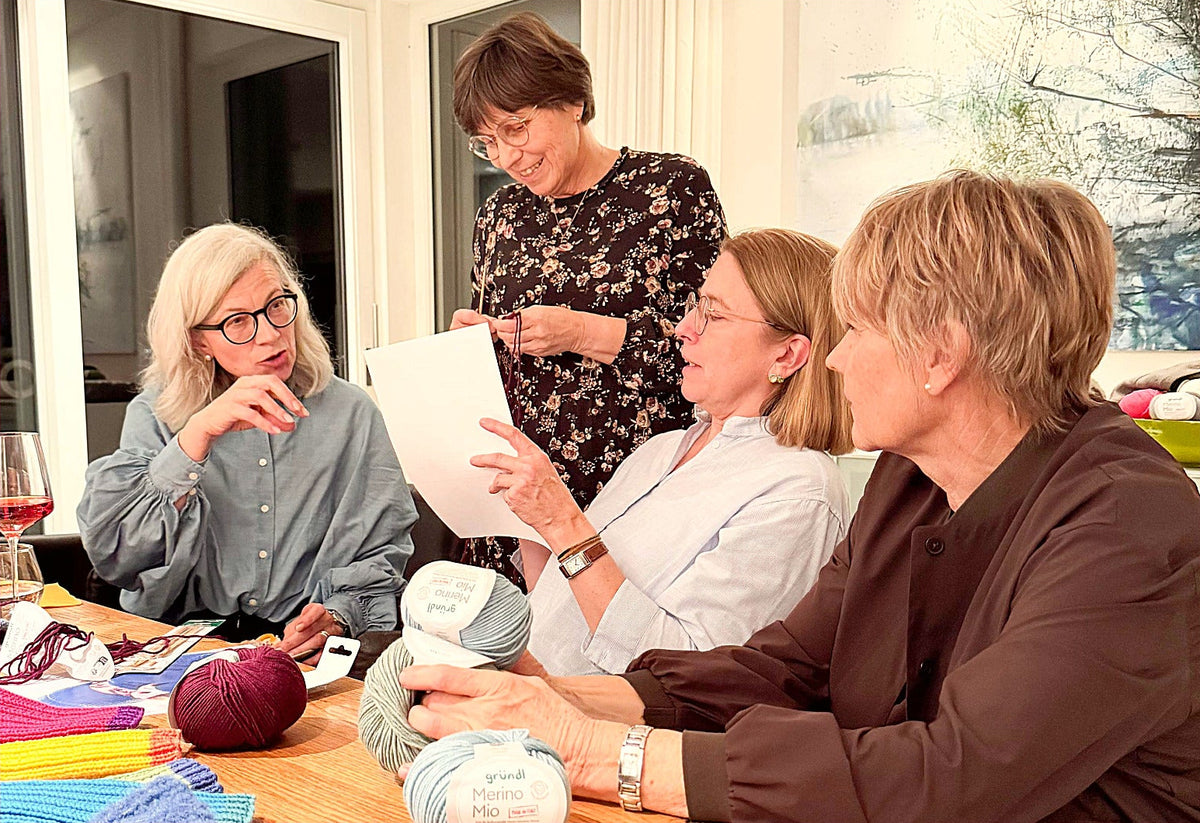
Handicrafts for a good cause
Mit unseren Charity-Projekten zeigen wir, dass Stricken und Häkeln weit mehr sein können als ein schönes Hobby. Gemeinsam entstehen krea...
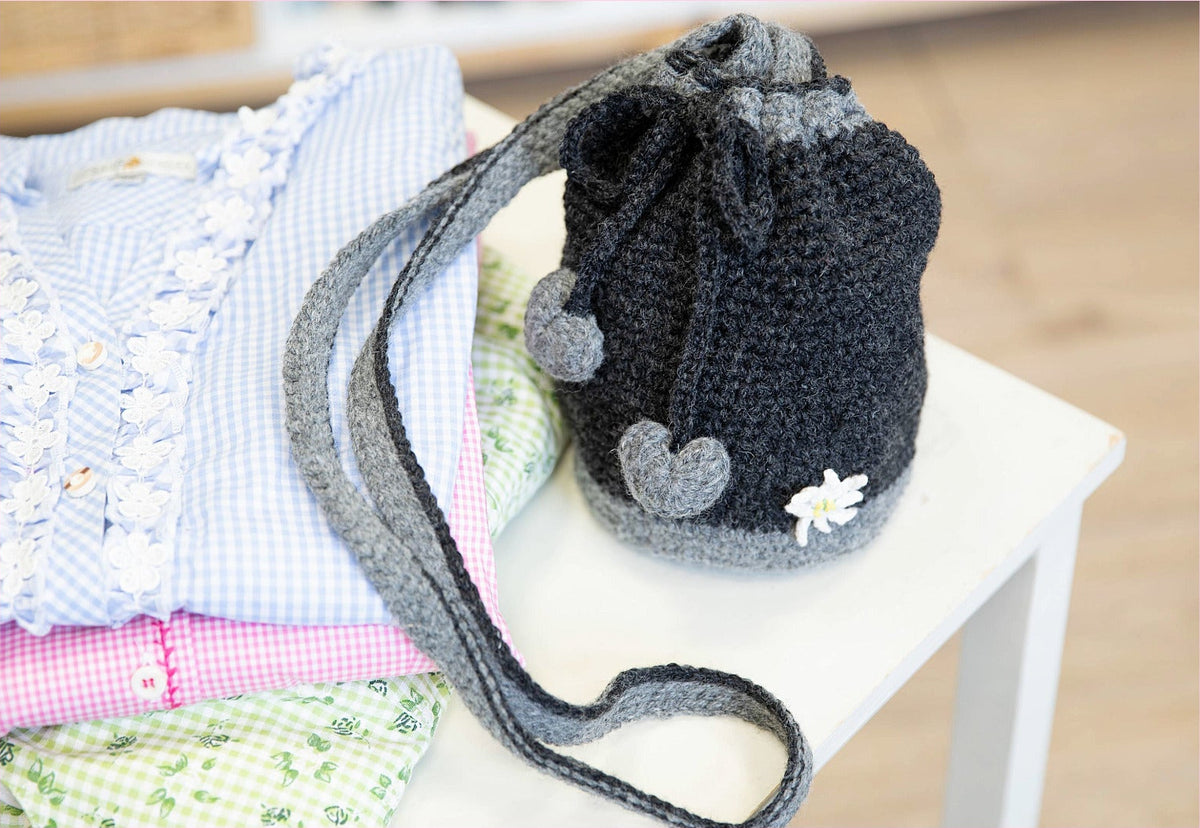
Handmade traditional clothing
Handmade traditional clothing