

Visible mending: This is how beautifully you can mend small holes.
Visible Mending: The new trend is repairing instead of throwing away. We asked illustrator Uli from the Instagram account Schneckstein for her tips and tricks...

I have not been on Instagram for very long; I only signed up in March of last year. My actual name is not particularly rare, so that was out because it was already taken. It quickly became clear that something else was needed. At our house back then, the sing-song "1 - 2 - 3 - 4 Eckstein, everything has to be hidden" was constantly in the air. Strange word - Eckstein. We played around with it and somehow Schneckstein stuck. Since I often embroider holes with snail shells and snails (their shape simply lends itself to that), I tried it. It was not taken yet, and it stayed.

I studied graphic design and animation and work freelance as a graphic designer and illustrator. I learned sewing, embroidery, knitting and crochet from my grandmother when I was a small child. As a little child, I mainly sewed clothes for my dolls and dollhouse, crocheted bedding and so on. But I was also taught darning very early, at the age of 5 or 6. I have always enjoyed handicrafts and making things. Creating things with my hands fulfils me. I like being spontaneous, which is why I never sketch out my embroideries beforehand and I do not particularly like knitting socks. I enjoy knitting the first sock, but the second one bores me because you basically have to do again what you already did with the first. Of course, my life is not only filled with handicrafts. The pandemic and the restrictions that came with it really disrupted our routines. Luckily, at the beginning of the year we moved into a small house with a garden, which makes everything easier, and I am simply very happy about the garden. We try to make our lives as sustainable as possible, and repairing is simply part of that. Not only with clothing, but especially there.
I grew up repairing clothes. At home, it was simply part of life and my grandmother taught me quite early to repair my own things. In my family, people generally made a lot themselves and always tried to make the best possible use of the things that were already there. Bags from frozen beans, for example, were washed and reused - first for school carrots, and when they were no longer good for that, as bin bags. Clothing was treated the same way. Everything was darned and repaired until it was no longer worth it - then cleaning cloths or ribbons were cut from it. Back then, it was anything but cool and rather embarrassing if anyone noticed it at all (fortunately, though, there were a few people in my circle of friends who also brought their carrots and apple slices to school and nursery in empty frozen vegetable bags). I think it is incredibly wonderful that people are now slowly becoming aware that a hole in a pair of trousers does not mean they belong in the bin. And especially with my more visible repairs, I notice that it really does inspire others to repair too, which is incredibly great. It is also genuinely amazing what a difference it makes for the environment when you do not throw clothing away, but repair it and use it for as long as possible. Of course, not everyone has the skill or the time capacity to repair their clothes, and after spending the last 20/25 years repairing mostly for myself, friends and family, I now also accept repair commissions.
When I can decide entirely on my own, I usually try to see something in the shape of the hole. Most of the time, though, specific motifs are requested, whether by my children or by customers. Unusual wishes are the most fun for me. A while ago, for example, I was allowed to embroider a jumper with a BVG underground train. They even sent along the view from the window onto the train so that the train could travel across the bridge on the jumper just like "in real life".
Phew... difficult question. I think I am rarely directly proud of my work... But things I like about repairing are these:
- When I have a sock in the repair pile that I have been wearing for 14 years. (Yep, 14 years. I made the oldest repair when I was 16...)
- When my daughters do not want to wear a pair of trousers because it does not have a repaired hole yet.
- When I realise how much clothing grows close to my heart while repairing it.

It varies a lot. I am currently repairing a cardigan that my great-aunt knitted for my grandmother 60 years ago. The cardigan is so thin in places that you can see through it, and it has countless holes. I am not repairing it with embroidery, but with duplicate stitch and what is known as Swiss darning, and I have probably already invested 35 hours or more. At least. Some other repairs, such as closing a seam, take only 5 minutes. The time varies greatly depending on the size of the hole and, with embroidery, depending on the motif too.
For darning itself, you need nothing more than a needle and thread. I like using cotton embroidery thread or wool yarn, and often ordinary sewing thread too. It all depends on how fine the fabric is. Ideally, fabric and yarn should be similar.
For sock repairs, a darning mushroom or darning egg is useful, but it is not strictly necessary - an orange, a boiled egg, a rounded object or something similar will also do. You do not need more than that at the beginning.
I have a few other things in the cupboard: small sharp pointed scissors, a thimble and various needles. But to start, needle and thread are enough.
Closing a hole is not difficult at all! HERE I show one method with step-by-step instructions. The most important thing is simply to start. Do not put pressure on yourself! As with almost everything, a lot comes with practice and routine.
The great thing is that repairing also increases your love for the garment; the next hole is then much easier to repair.
It also always helps me to remember that hardly anything makes clothing sustainable as simply as wearing it for a long time.
I am very happy about every repair request. Just send me a DM or an email. It would be helpful if you could send me a sharp photo of the damage right away, ideally with a coin or something similar for size comparison. Feel free to tell me how you would like the repair to look: embroidered? Abstract? Repaired as discreetly as possible? A rainbow trout over the hole? Just darned? If you have a price limit in mind, that would also be useful for me to know.
I bill my repairs at an hourly rate, so it is difficult to give a flat price. A small repair can be quite inexpensive; larger or more detailed embroidery can take significantly longer. I always discuss that individually beforehand.
Perhaps this, because the question comes up very often: there is basically nothing that cannot be repaired somehow.
And because this is also asked again and again: a hole is, of course, not strictly necessary for a request to me. I am also happy to embroider completely intact items, including shoes, baby wraps, backpacks or bags...
Many heartfelt thanks to Uli for this insight into her personal mending story! We are thrilled by her commitment, her creativity and, of course, her sustainable mindset.
Now we can hardly wait to try visual mending ourselves. Are you joining in? In our shop, you will find the right tools for it: embroidery and darning needles, thimbles, sewing needles and, of course, a huge selection of yarns and wool. Have fun creatively repairing your holes. We are excited to see your results - feel free to send us a photo of your artwork.
More articles
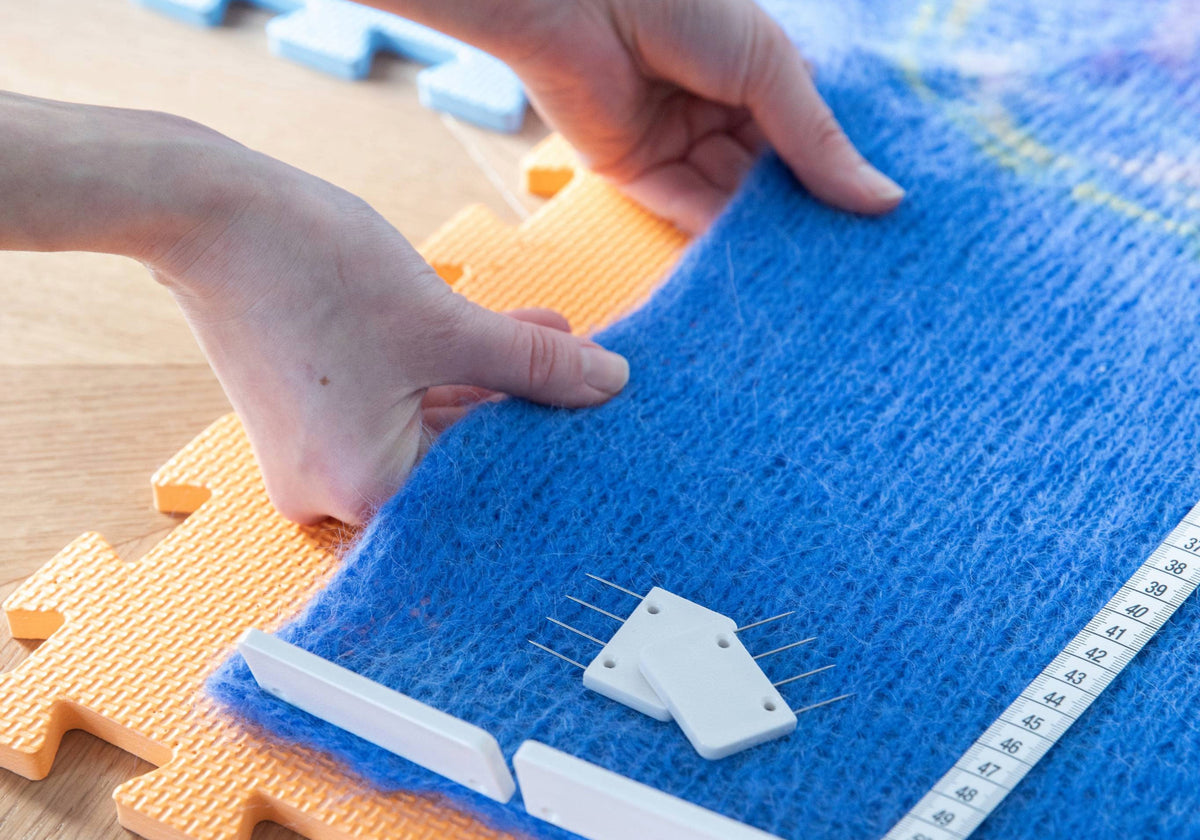
Blocking knitted pieces – why blocking is the secret finishing touch
Blocking knitted pieces – why blocking is the secret finishing touch
If you've invested a lot of love and time in your knitting project...
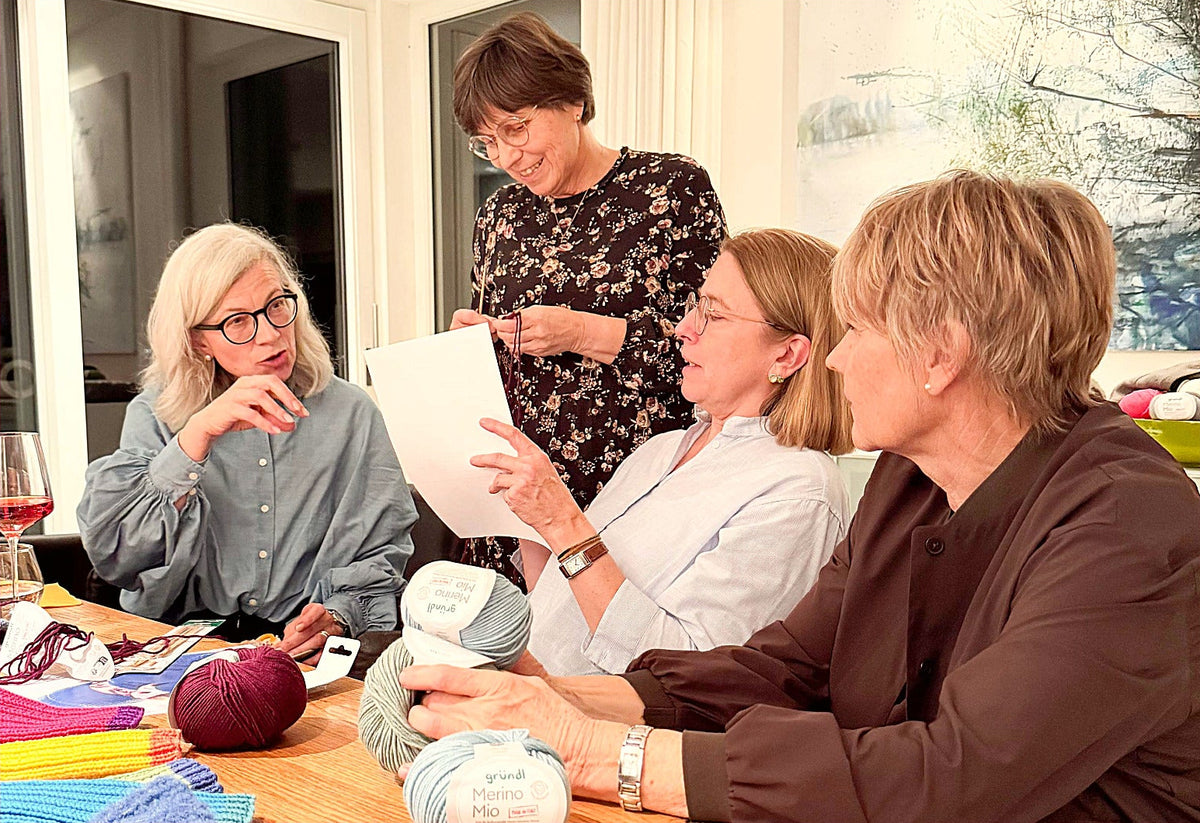
Handicrafts for a good cause
Mit unseren Charity-Projekten zeigen wir, dass Stricken und Häkeln weit mehr sein können als ein schönes Hobby. Gemeinsam entstehen krea...
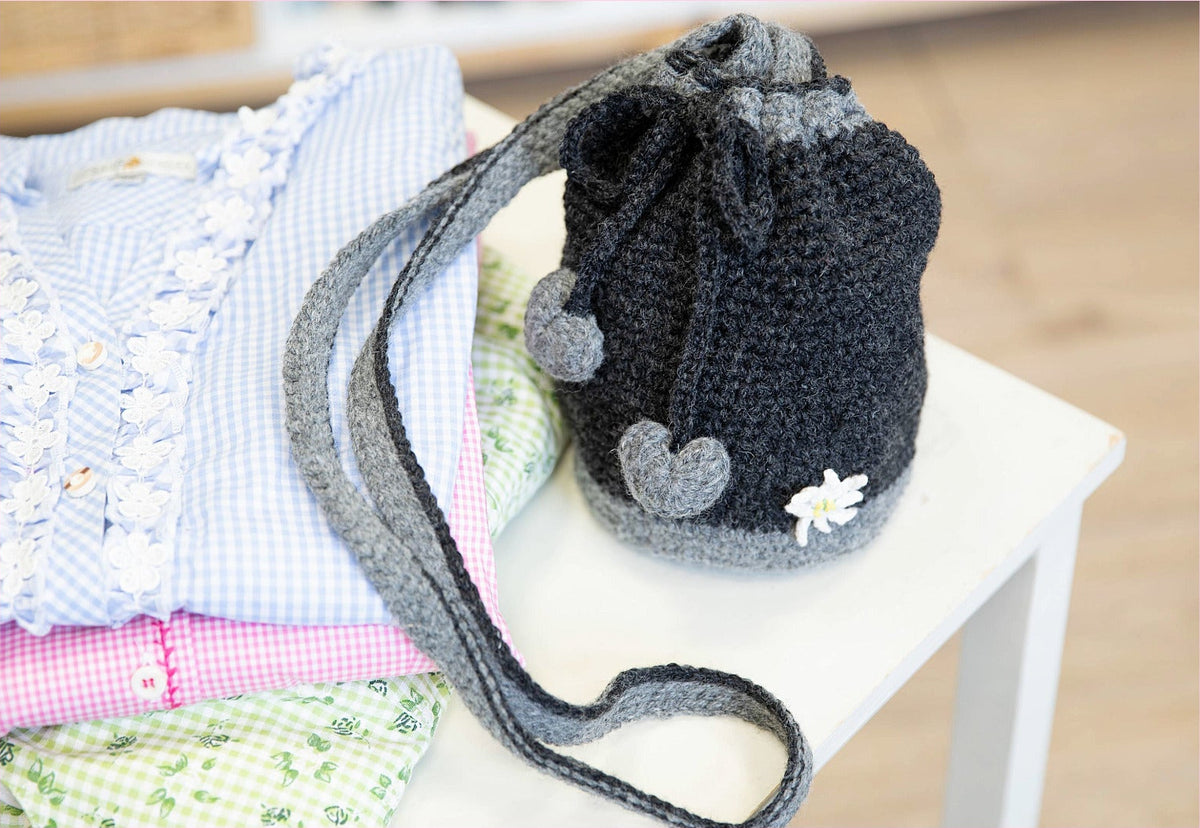
Handmade traditional clothing
Handmade traditional clothing