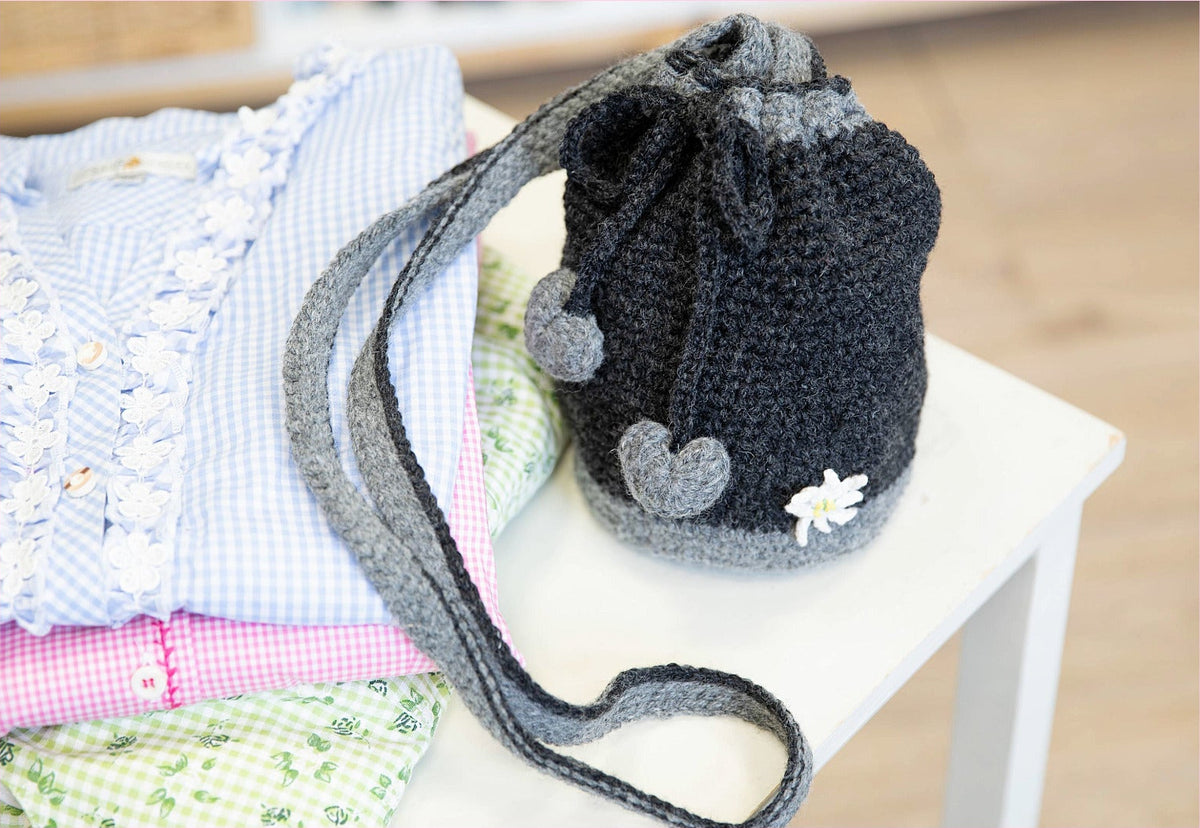
Felted knitting: One technique - many possibilities

Felting wool is a pure natural product. In most cases, this means virgin wool from sheep. The most important thing for wool used for felting is that it must not have a superwash finish.
Felting wool can be used in many different ways. There is felting wool for knit-felting, wet felting and needle felting. We would not be Gründl if our range did not include wool for knit-felting and crochet-felting.
Felting wool is not only for felting. Even though the word "felting" is part of the name, felting wool also looks wonderful before it is felted. You can therefore knit your felting wool in the classic way and, if you like, felt it afterwards.


Another printed yarn in the Gründl felting family is Gründl Filzwolle color. It creates an interesting and beautiful pattern. Every colour combination looks unique, making it hard to choose just one shade. The pattern appears directly from the ball, with no colour changes, no constant knotting and no sewing in endless ends.
As a general rule: any natural wool can be felted. As mentioned above, virgin wool is one of the best-known materials for felting. But fine yarns such as alpaca, mohair or angora can also be felted without any problem.
What you should pay attention to, however, is the structure and production process of the wool. So that your wool or wool yarn can felt beautifully, the material should be made from pure wool. Synthetic materials such as polyester, polyamide or acrylic, and plant fibres such as linen, flax, cotton and viscose, do not felt, and neither does silk.
It is also important to check the yarn label and make sure the wool has no superwash finish, meaning no anti-felting treatment. So if you read "guaranteed felt-free" or "superwash", the material is not suitable for felting.

During washing, or during the felting of wool that has not been treated with a superwash finish, the scales of the individual wool fibres interlock. The lanolin also bonds them together. This results in shrinkage, meaning a difference between unfelted and felted knitted or crocheted pieces, of around 30% - 40%.
Felting wool has plenty of advantages once it is felted. Small mistakes or uneven stitches disappear after the felting process. That makes felting wool an ideal yarn for all knitting and crochet beginners. In the last section of this article, we share a project that is wonderfully easy for felting beginners to make.
Another plus point of felted pieces is that stitches cannot run. Goodbye laddered stitches, hello durability!
Felted items are also thicker, more hard-wearing and warmer than classically knitted felting wool, because the ability to retain heat is greater after felting.
The superwash finish is a finishing process for pure wool that prevents felting during washing. In this process, the individual scales of the wool fibre are removed. The protective layer lost in the process is technically restored. This means the wool fibres can no longer interlock during washing and the wool does not felt. To ensure the longest possible anti-felting protection, the wool tops are already treated with a superwash finish before spinning.


Take knitting needles or a crochet hook, a suitable felting wool, a washing machine and tennis balls. Once your chosen project has been knitted or crocheted with the shrinkage rate in mind, you can get started. At 40°C in a coloured wash programme lasting around two hours, with a spin speed of 800 - 1000 rpm, the natural scales of the pure wool interlock. Make sure not to select a short wash or eco programme. Which detergent is suitable for felting? In principle, any detergent can be used. Liquid detergent has the advantage that it cannot leave small grain-like residues. It is important that the detergent is free from optical brighteners and built-in fabric softening care. You should also avoid fabric softener.
Start the washing machine and wash the felting wool. Look forward to unique, individual felted pieces. We recommend removing your felted piece from the machine as soon as possible after the spin cycle. This helps prevent unattractive creases. You can then shape your finished felted pieces straight away. Pull the edges outwards and smooth out any folds. All done? Time to let your felted unique piece dry.
Our Gründl tip: To achieve the best shape for your felted knitted or crocheted pieces, we recommend weighing down even, flat shapes with heavy objects, such as books. Baskets, hats and other felted pieces in the shape of a cylinder or cone will take on a wonderful form if they are stuffed while still damp, freshly out of the washing machine. For self-felted slippers: step into your still-damp felt slippers after felting. You will be delighted, because while you wear them, the shoes adapt to your feet. Voilà, now you will immediately know which is the right shoe and which is the left.
Felting wool is a natural product. Depending on which fibres are used in wool for knit-felting, which dye has been used, and which washing machine is used to felt the knitted or crocheted wool, there may be slight differences in the finished felted pieces.
Let's start with the material. Depending on the felting wool you use, the fibre length, fineness and crimp may vary. The dye used to colour the felting yarn can also influence its felting properties.
Next comes the technique you used to work your felting wool. Compared with knitted pieces made from felting wool, crocheted pieces do not felt as strongly. This is because crocheted stitches are more three-dimensional and have a stronger structure than knitted projects, which are known for a flatter look.
How is your unique piece worked? Do you knit loosely? Do you crochet tightly? The firmness of your knitted or crocheted piece also affects the felting result. In short: tightly worked stitches felt less strongly than loosely knitted ones. Why? If stitches are too tight, the felting wool is bound in place and cannot felt optimally through the combination of water, friction and time.
Another reason for knitted pieces not felting optimally can actually be your washing machine. Modern machines wash according to weight. They calculate the water consumption to match the textiles you have placed in the drum. This can mean that if there is only one knitted or crocheted item to be felted, too little water is drawn and there is not enough liquid for an optimal felting process.
Water hardness is also part of the washing machine factor. Depending on the lime content and pH value of the water, the final felting result can vary.
Time can also play a role. The felted piece should remain in the drum for around 2 hours, as this helps ensure a wonderful result.
To be able to predict your felting result as precisely as possible, we recommend making a felting sample.
As the saying goes: trying is the best way to learn. Just test it out. As mentioned above, we recommend knitting or crocheting a gauge swatch in your chosen pattern to test whether your yarn felts. This also allows you to determine the shrinkage rate. That is very important, because the final size after felting can vary.
The information in our Gründl patterns has been tested, but it may vary. Gründl felting wool shrinks by around 30% to 40% during washing, and the shrinkage differs in width and height. If the felted piece needs to have a very specific size, it is therefore important to make both a gauge swatch and a felting sample:
- Knit a piece of around 24 cm x 30 cm using the yarn quality, colour and pattern intended for the finished piece.
- Mark a 10 cm x 10 cm square in the centre with a contrasting yarn that does not felt, for example cotton yarn. Use this to determine the number of stitches and rows. In our unfelted example: 11 sts x 16 rows = 10 cm x 10 cm.
- Felt your sample piece in the washing machine.
- Then measure your marked square. In our example it is 7.5 cm wide x 6 cm high. This gives the following calculation: 11 sts = 7.5 cm and 10 cm = 15 sts; 16 rows = 6 cm and 10 cm = 27 rows. The felted gauge is therefore 15 sts x 27 rows = 10 cm x 10 cm.
You can now use this result as the basis for calculating your finished felted piece exactly. For example, if your unique piece should be 30 cm wide and 20 cm high, you need to cast on 45 sts and knit 54 rows.
For everyone looking for an activity with educational value to do with children: felting with children is much more than a creative break. Felting is not only great fun, it is also a wonderful and, above all, educational experience. Children learn how wool feels and what happens to it when it felts in combination with water and soap. And do you know what else is fantastic? Through felting, you can playfully support children's fine motor skills, concentration and sensory perception.
In our collection of free felting patterns, we have a wonderful project for children using felting wool: colourful felt jewellery. Our Gründl Filzwolle Funky is not knitted or crocheted here; it is wet-felted. It may sound unusual, but it is perfect for felting with children.
This is how wet felting with felting wool works: first cut a strand of wool into pieces about 10 cm long. Then pull apart the individual wool fibres of this yarn. Once the fibres are in front of you, shape them dry into a ball with your hand. Then wet felting can begin:
Dip each ball into soapy water, squeeze it out and roll it between your soaped palms in circular movements, first with gentle pressure. When the ball becomes firmer, you can increase the pressure while rolling. On a rough surface, such as a rubber mat with nubs, a chopping board or a kitchen grater, firm and evenly felted balls are created.
Finally, rinse them well and let them dry. Then the colourful threading can begin. Threaded onto nylon cord, they become necklaces and bracelets for children and adults. Of course, you can also turn them into key rings or napkin rings.
A felting project for the whole family or the perfect activity for a children's birthday party. No matter which felting project you choose, every child will love this creative felting adventure.
Felt bags, felt socks, felt flowers, felt slippers: we love this technique so much that we would like to felt an entire collection right away. Let's get started: buy felting wool, lay out all your tools and download one of our free felting patterns. Take a look at our felting instructions straight away. Our Gründl felting wool for knitting is already waiting for you too.
We think felted unique pieces make wonderful little gifts, and of course individual knitted accessories for your home. Perfect for the cool season that is just around the corner. There is nothing better than warm, soft felted pieces for autumn and winter. Felted decoration ideas also look wonderful. How about crocheted felt baskets or placemats for your living room table?
The fact is: felting wool has an incredible amount to offer. We are sure you will create beautiful one-of-a-kind pieces with it. If you like, you can tag us on our social media channels with products you have made from our felting wool. We are excited already and look forward to your photos.
There we go! Now you know what you need for felting, which felting options are available and what to watch out for. Are you ready for a DIY felt project that will brighten up your dining table in no time? Let's go: we will show you how to knit your own felt coasters.
Step 1: choose your favourite colours and start knitting. For this colourful felting project, we used our Gründl Filzwolle Funky. This OEKO-TEX® certified felting yarn made from pure virgin wool is available in six bright neon shades.
How big should the knitted piece be? In this case, for once, we can skip the gauge swatch. Unlike precisely sized felt projects such as handbags or shoes, our felt pieces are cut to shape after washing.
In our example, we cast on 22 stitches plus 2 edge stitches and knitted 35 rows in stocking stitch.


Once the wash cycle is finished, we recommend taking the felted knitted pieces out of the drum as soon as possible. While they are still damp, you can pull them into shape and remove creases.
Our Gründl tip: books or other heavy objects are ideal for weighing down the felted shapes and smoothing them. A piece of kitchen paper between the felt project and the object absorbs the remaining moisture.
Tadaaa! In the final step, draw your desired shape onto the felt pieces after drying and cut it out. In our case, we made round coasters. We used a simple glass jar as a template.
There are countless ways to cut out your felt pieces, so let your imagination run free. How about hearts, stars or organic shapes? And what do you think of key rings instead of coasters?
PS: Your felted shapes can also be wonderfully embellished. You can embroider the felt, decorate it with sequins or sew fabric shapes onto it. Creativity knows no limits. We hope you have lots of fun knitting, felting and decorating.
More articles
Blocking knitted pieces – why blocking is the secret finishing touch
Handicrafts for a good cause